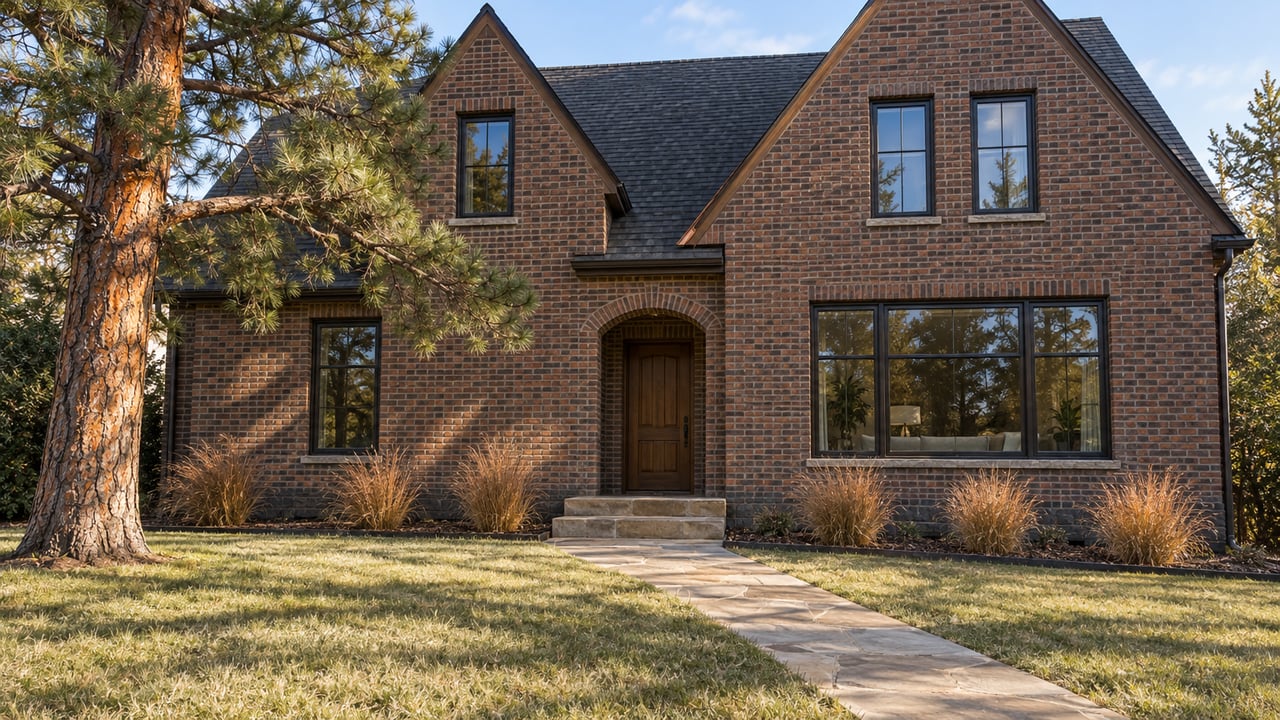
On South Quitman Street in Harvey Park there is a low, wide-eaved ranch with a shallow gabled roof and a carport. Historic Denver's survey of the neighborhood uses it as its example of a Carey Holiday Contemporary Ranch. A few blocks away on South Osceola Street, the same survey picks a different house as its Burns Modern example. A third group, the Cliff May homes, sits south of West Jewell Avenue between Sheridan and Federal. From the sidewalk the three groups look alike, and listings often call all of them "mid-century." They came from different designs and builders, and today each one is only as original as its owners have kept it.
A buyer who starts from that fact shops Harvey Park differently. The label doesn't set the value. What sets it is how much of each house's original design is still there, and what the house needs to be comfortable through a Denver winter. This winter, the wider market leaves room to negotiate over the second part.
Three Kinds of Ranch Under One Label
Harvey Park grew quickly. The Denver Public Library's neighborhood history says about 4,000 homes went up in the late 1940s and early 1950s. East of Lowell Boulevard, D.C. Burns Realty developed the Burns-Brentwood subdivision, with small houses built for returning veterans. The library places the neighborhood between Mar Lee, Jewell Avenue, Yale Avenue, Sheridan Boulevard and Federal Boulevard. Harvey Park Lake, Wolcott Lake and Riviera Lake all sit inside those lines. The library describes Wolcott and Riviera as private lakes.
The best-known group came later. California designer Cliff May and architect Chris Choate created a prefabricated post-and-beam system. D.C. Burns Realty & Trust, led by Franklin L. Burns, built Denver's tract of these homes from late 1954 through 1956, according to an interview published by Modern in Denver. Historic Denver describes the system as a low-cost kit of parts shipped by truck to Harvey Park. The Denver Architecture Foundation and Historic Denver count 170 Cliff May homes. The Modern in Denver interview puts the figure at 171.
Burns's work didn't end with that tract. Atomic Ranch profiled a 1955 Harvey Park house that isn't a Cliff May design and linked it to Franklin L. Burns's building in the area. A second builder, contractor Lou Carey, worked here at the same time. Historic Denver says he built about 200 Contemporary-style homes in Harvey Park in the mid-1950s.
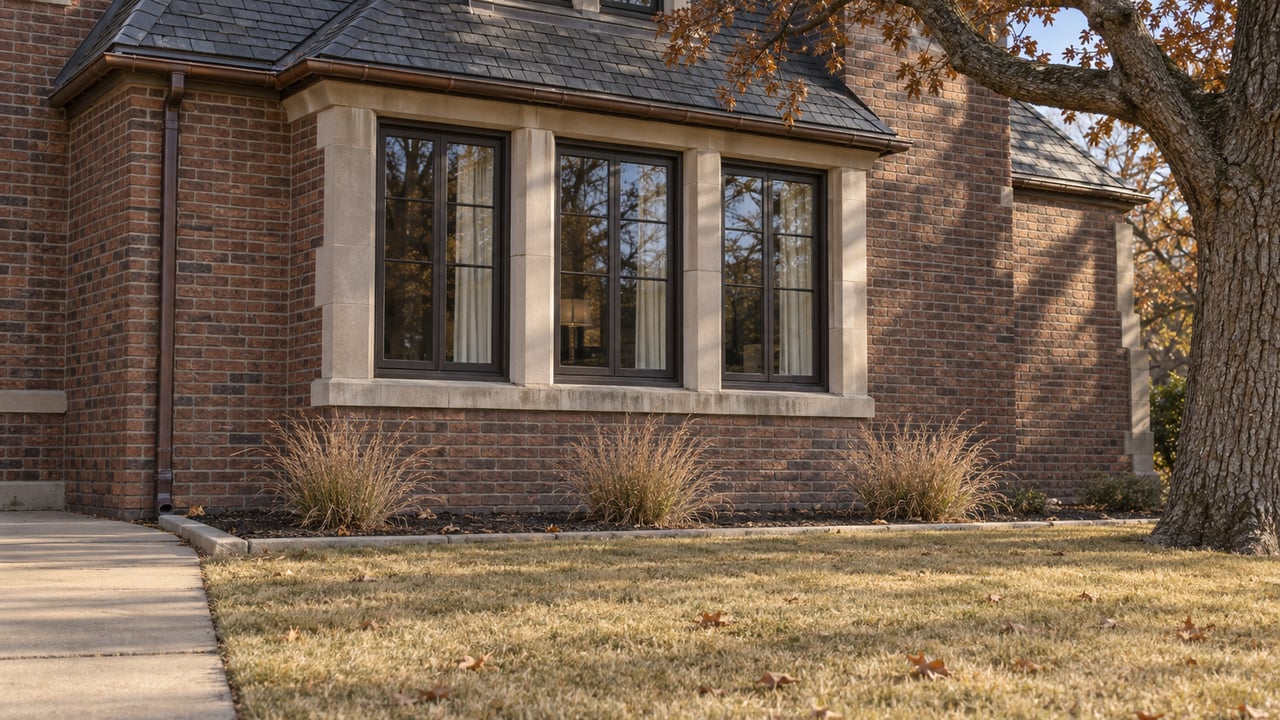
Historic Denver's Harvey Park survey report, revised in November 2014, lists the features the three groups share: horizontal massing, rectangular or L-shaped plans, low-slope gabled roofs, wide eaves, carports, clerestory windows and full-height glass. Since all three use the same design vocabulary, a buyer can't tell from the curb which of the three kinds of house they're looking at or how much of it is original.
What the Cliff May Frame Allows, and What It Asks
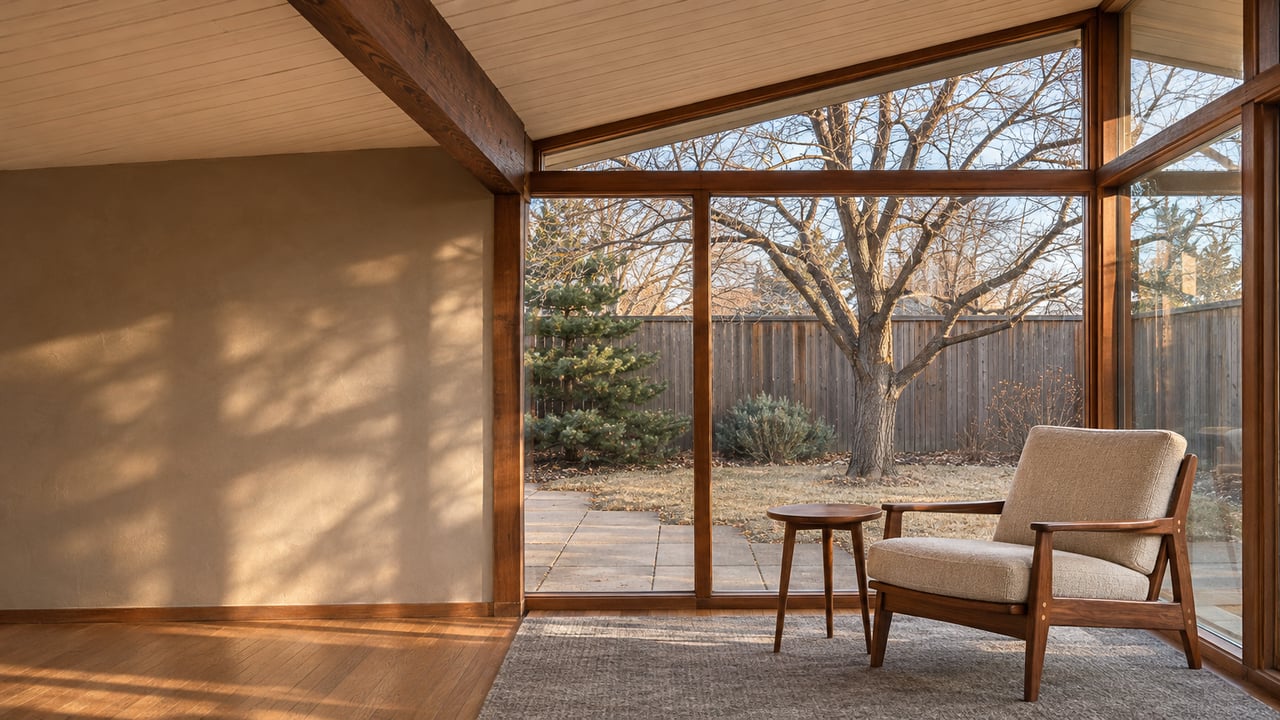
The Cliff May homes are built differently from a standard ranch. The 2021 Modern in Denver interview explains that the post-and-beam structure has no load-bearing interior walls. The Denver Architecture Foundation describes a design built on glass walls and courtyard living that joins the rooms to the yard.
That structure gives an owner room to change the floor plan. Rooms can be rearranged without the structural work a conventional house would need. The downside is that the house can be changed easily in ways that work against the original design. If one Cliff May has kept its open courtyard plan and another was walled into small rooms decades ago, the two are different products, even when they're on the same block with the same square footage.
The same structure has costs that come with its age. The 2021 Modern in Denver interview noted that these historic homes may contain asbestos or other old materials, have little insulation, and give up some energy efficiency. It named new windows and HVAC as the practical upgrades. A house that relies on full-height glass and has little in its walls takes the most work to keep warm during the cold months.
This is where a buyer's real choice lies. The strongest version of this stock keeps its original design and has new windows and mechanical systems. Keep the design but leave the 1950s systems in place, and you have a project. Where an owner updated the systems but remodeled the floor plan, the result is comfortable but has lost much of what made it a Cliff May. Each of these has a different price, and the "mid-century" label in a listing doesn't tell you which one you're seeing.
Recognized in the Plan, Preserved by Each Owner
Neighbors have tried for years to have these homes formally recognized. In its October–December 2016 newsletter, the Harvey Park Improvement Association said a volunteer team was preparing a historic-district application for the 170 "Rocky Mountain Cliff May Homes." It noted that owner support would be needed and that the application wasn't yet a "done deal." In 2017, 5280 reported that two applications had gone through Denver's planning department. Historic Denver also included the Harvey Park Cliff May homes in its 50 Places campaign.
The most recent city action is the Far Southwest Area Plan, which Denver City Council adopted unanimously on December 8, 2025. Its text names the Cliff May, Burns Modern and Carey Holiday homes as "an important part of Far Southwest Denver's history."
On the ground, the houses look the way they do today because of the choices each owner has made over the past seventy years. Each Harvey Park ranch shows its own record of those choices in the windows, the carport and the interior walls. A buyer who wants a mid-century house that is still largely intact is buying that record, and the record is part of what they should be paying for.
What October's Numbers Mean for an Original-Condition Ranch
The Colorado Association of REALTORS county report for October 2026, current as of November 4, puts Denver County's single-family median sale price at $704,000. That is up 0.6% from October 2025, on 385 single-family closings, down 19.8% from a year earlier. In other words, prices held about steady while sales volume fell by about a fifth.
The association's October 2026 statewide release shows how those slower sales are closing across the seven-county Denver metro. Sellers paid concessions in nearly 64% of October sales, and nearly 49% of October transactions involved a price reduction. The metro single-family median was $619,000 that month, and the average time on market was 52 days.
Those figures cover all of Denver, not Harvey Park in particular, but they apply directly to an original-condition Cliff May or Carey house. When most metro sales in October included concessions, asking a seller to share the cost of windows, insulation or HVAC is a normal request, not an aggressive one. Those are the upgrades the 2021 Modern in Denver interview named for this housing stock. A ranch with original glass and older systems shows its drawbacks most clearly in late November, when a buyer can feel the drafts during a showing. That makes winter a good season to judge these houses on their actual condition.
The same figures suggest restraint on the other end. A house that has kept its original design and already has its systems upgraded is the version that is scarce in any market. A slower month doesn't mean every Harvey Park ranch is negotiable to the same degree. Buyers comparing two homes on the same street should expect the gap between them to follow their condition, and they can bid accordingly.
Quick Answers
Is every mid-century house in Harvey Park a Cliff May? No. The Cliff May tract is about 170 homes south of West Jewell Avenue. Lou Carey built about 200 Contemporary-style homes in the mid-1950s, and Burns built other modern homes in the neighborhood. Many more of Harvey Park's roughly 4,000 homes date from the late 1940s and early 1950s.
Where can I see what the original design looked like? Historic Denver's Harvey Park survey report includes example houses and a list of the shared design features. The Denver Architecture Foundation and Modern in Denver have both published on how the Cliff May system was designed and built.
If you're weighing a Harvey Park ranch and want to know how much of the original house is still there, what its systems will need, and how to reflect both in an offer this winter, Graham Group Real Estate can walk through it with you, house by house. Start a Conversation, and see our Harvey Park neighborhood page for more on the area.